
THE E.C.A.R.T. Approach
Five levers to build
Five levers to build
a lasting lead
a lasting lead
Le marketing d'une entreprise industrielle exige la même rigueur que celle qu'elle applique à sa production. La méthode É.C.A.R.T. structure les cinq leviers qui construisent la part de marché, la marge et la fidélité.
Your marketing, assessed in 5 minutes
Your marketing,
evaluated in 5 minutes
The method at a glance
Consistency before excellence
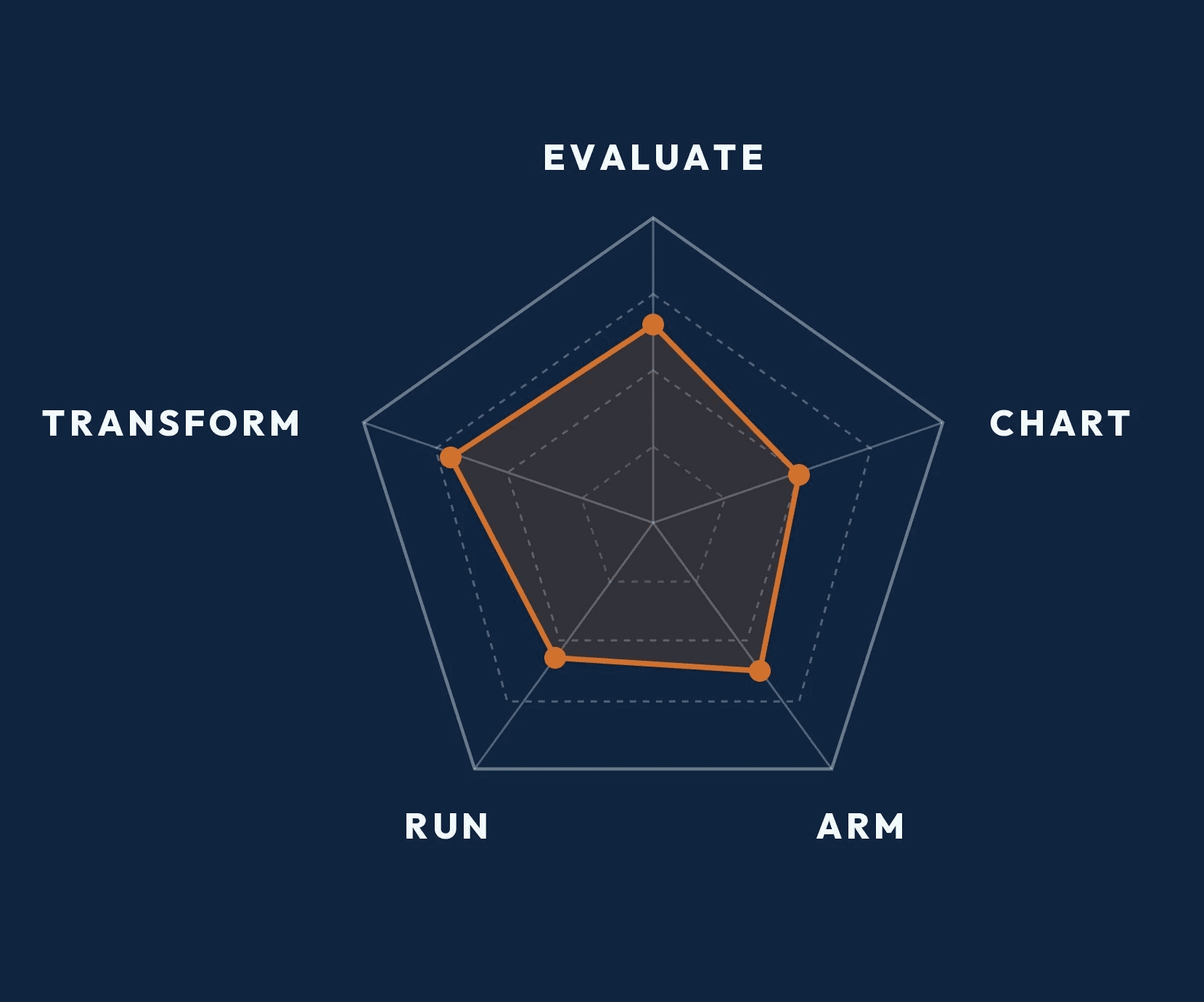
Five dimensions, one chain. Evaluate the market, chart the strategy, arm the organization, run acquisition, transform the customer relationship. Each lever extends the one before it. Performance comes from the consistency of the whole, not the excellence of any single part.
The method at a glance
Consistency before excellence
Five dimensions, one chain. Evaluate the market, chart the strategy, arm the organization, run acquisition, transform the customer relationship. Each lever extends the one before it. Performance comes from the consistency of the whole, not the excellence of any single part.
The method at a glance
Consistency before excellence
Five dimensions, one chain. Evaluate the market, chart the strategy, arm the organization, run acquisition, transform the customer relationship. Each lever extends the one before it. Performance comes from the consistency of the whole, not the excellence of any single part.
The method in detail
The method in detail
E
E
01
01
·
E
E
E
Assess
evaluate
evaluate
Decode the market and performance before deciding
Decode the market and performance before deciding
Decode the market and performance before deciding
Before any investment, sales, or marketing decision, evaluation work raises confidence in the decision and ensures that what follows is relevant. Understand the market in detail: customers, prospects, segments, competitive positions, the regulatory framework, the technical disruptions taking shape. The same rigor applies internally: what each customer and each product line truly contributes, where margin is built and where it is destroyed. This work is built over time, with method. It is the difference between a strategy that acts and one that merely reacts.
Before any investment, sales, or marketing decision, evaluation work raises confidence in the decision and ensures that what follows is relevant. Understand the market in detail: customers, prospects, segments, competitive positions, the regulatory framework, the technical disruptions taking shape. The same rigor applies internally: what each customer and each product line truly contributes, where margin is built and where it is destroyed. This work is built over time, with method. It is the difference between a strategy that acts and one that merely reacts.
Before any investment, sales, or marketing decision, evaluation work raises confidence in the decision and ensures that what follows is relevant. Understand the market in detail: customers, prospects, segments, competitive positions, the regulatory framework, the technical disruptions taking shape. The same rigor applies internally: what each customer and each product line truly contributes, where margin is built and where it is destroyed. This work is built over time, with method. It is the difference between a strategy that acts and one that merely reacts.
examples of situations where Evaluate is missing

8%
8%
Only 8% of customers say their supplier delivers a superior experience. While 80% of companies think they provide one.
Only 8% of customers believe their supplier delivers a superior experience. Yet 80% of companies believe they do.
What we deliver
What we deliver
MARKET
MARKET
Market diagnostic and sizing
Market diagnostic and sizing
Market diagnostic and sizing
Segmentation
Segmentation
Segmentation
Competitive analysis
Competitive analysis
Competitive analysis
Market voice
Market voice
Market voice
Buying decision process
Buying decision process
Buying decision process
Regulatory and standards monitoring
Regulatory and standards monitoring
Regulatory and standards monitoring
PERFORMANCE
PERFORMANCE
Product performance vs customer perception
Product performance vs customer perception
Product performance vs customer perception
Sales performance and win-loss comparison
Sales performance and win-loss comparison
Sales performance and win-loss comparison
Financial performance
Financial performance
Financial performance
True margin by customer and by SKU
True margin by customer and by SKU
True margin by customer and by SKU
C
C
02
02
·
C
C
C
Frame
chart
chart
Set the course: what you target, what you decline
Set the course: what you target, what you decline
Set the course: what you target, what you decline
Once the market is understood, you have to decide. Which segments to attack, which accounts to defend, which battles to decline. Which value proposition to articulate, what proof supports it, which brand carries it. Charting is the moment a company names what it is, what it targets, and what it leaves to others. It separates an interchangeable brand from a preferred one.
Once the market is understood, you have to decide. Which segments to attack, which accounts to defend, which battles to decline. Which value proposition to articulate, what proof supports it, which brand carries it. Charting is the moment a company names what it is, what it targets, and what it leaves to others. It separates an interchangeable brand from a preferred one.
Once the market is understood, you have to decide. Which segments to attack, which accounts to defend, which battles to decline. Which value proposition to articulate, what proof supports it, which brand carries it. Charting is the moment a company names what it is, what it targets, and what it leaves to others. It separates an interchangeable brand from a preferred one.
examples of situations where Chart is missing
4%
4%
Only 4% of B2B executives say their company has a clear, consistently understood value proposition. Those companies grew revenue by 19% in 2025, versus 12% for the rest.
What we deliver
Segment prioritization and ambition
Segment prioritization and ambition
Segment prioritization and ambition
Competitive strategy and positioning
Competitive strategy and positioning
Differentiating value proposition
Differentiating value proposition
Strategic account plan
Strategic account plan
Brand architecture
Brand architecture
Narrative identity (story, tone, stance)
Narrative identity (story, tone, stance)
Strategic plan
Strategic plan
A
A
03
03
·
A
A
A
arm
arm
arm
Give the field what it needs to win
Give the field what it needs to win
Give the field what it needs to win
Once the strategy is set, you have to equip the company to hold it. Market needs translate into range changes. Price is defended through value, the brand is applied across every channel, sales teams have segment-by-segment pitches. Marketing and sales speak the same language. Performance steering produces metrics the executive committee reads. Without this work, the strategy stays on the slides. It is the difference between a decision and a system.
Once the strategy is set, you have to equip the company to hold it. Market needs translate into range changes. Price is defended through value, the brand is applied across every channel, sales teams have segment-by-segment pitches. Marketing and sales speak the same language. Performance steering produces metrics the executive committee reads. Without this work, the strategy stays on the slides. It is the difference between a decision and a system.
Once the strategy is set, you have to equip the company to hold it. Market needs translate into range changes. Price is defended through value, the brand is applied across every channel, sales teams have segment-by-segment pitches. Marketing and sales speak the same language. Performance steering produces metrics the executive committee reads. Without this work, the strategy stays on the slides. It is the difference between a decision and a system.
examples of situations where Arm is missing
2.4x
B2B companies where marketing, sales, and product operate in alignment post 2.4x higher revenue growth. And profit growth twice as fast.
B2B companies where marketing, sales and product work in alignment deliver revenue growth 2.4x higher. And profit growth twice as fast.
What we deliver
What we deliver
Commercial offer
Commercial offer
Product range architecture
Product range architecture
Product range architecture
Product go-to-market
Product go-to-market
Product go-to-market
Pricing policy
Pricing policy
Pricing policy
Monetize hidden value
Monetize hidden value
Monetize hidden value
Brand visual identity
Brand visual identity
Brand visual identity
Sales enablement tools (pitches, brochures, competitor sheets, sales deck)
Sales enablement tools (pitches, brochures, competitor sheets, sales deck)
Sales enablement tools (pitches, brochures, competitor sheets, sales deck)
Account-specific value proposition for strategic accounts
Account-specific value proposition for strategic accounts
Account-specific value proposition for strategic accounts
Sales system
Sales system
CRM implementation or overhaul
CRM implementation or overhaul
CRM implementation or overhaul
Sales KPIs and pipeline
Sales KPIs and pipeline
Sales KPIs and pipeline
Lead qualification and marketing-sales SLA
Lead qualification and marketing-sales SLA
Lead qualification and marketing-sales SLA
Sales organization (teams, profiles, coverage)
Sales organization (teams, profiles, coverage)
Sales organization (teams, profiles, coverage)
R
R
04
04
·
R
R
R
set the pace
Run
Run
Activate commercial acquisition over time
Activate commercial acquisition over time
Activate commercial acquisition over time
In many industrial companies, acquisition happens in fits and starts. Occasional trade shows, intermittent campaigns, opportunities caught as inbound requests come in. The pace follows the market instead of leading it. A managed system rests on a few disciplines held steady: an editorial presence that establishes the brand on its themes, prospecting structured by segment, a pipeline that is built, challenged, and measured. Commercial acquisition becomes regular, not opportunistic.
In many industrial companies, acquisition happens in fits and starts. Occasional trade shows, intermittent campaigns, opportunities caught as inbound requests come in. The pace follows the market instead of leading it. A managed system rests on a few disciplines held steady: an editorial presence that establishes the brand on its themes, prospecting structured by segment, a pipeline that is built, challenged, and measured. Commercial acquisition becomes regular, not opportunistic.
In many industrial companies, acquisition happens in fits and starts. Occasional trade shows, intermittent campaigns, opportunities caught as inbound requests come in. The pace follows the market instead of leading it. A managed system rests on a few disciplines held steady: an editorial presence that establishes the brand on its themes, prospecting structured by segment, a pipeline that is built, challenged, and measured. Commercial acquisition becomes regular, not opportunistic.
examples of situations where Run is missing
72%
72%
Among B2B companies selling through seven or more channels, 72% gained market share over the year. With a single channel, that falls to 46%.
Among B2B companies selling through seven or more channels, 72 % gained market share over the year. With one channel, this falls to 46%.
What we deliver
Outbound lead generation
Outbound lead generation
Outbound lead generation
Inbound lead generation (digital: SEO, SEA, content, newsletter, etc.)
Inbound lead generation (digital: SEO, SEA, content, newsletter, etc.)
Inbound lead generation (digital: SEO, SEA, content, newsletter, etc.)
Content strategy
Content strategy
Content strategy
Trade shows and events
Trade shows and events
Webinars and social media management
Webinars and social media management
Sales pipeline management
Sales pipeline management
Account-Based Marketing (ABM)
Account-Based Marketing (ABM)
T
T
05
05
·
T
T
T
transform
transform
transform
Grow the customer portfolio
Grow the customer portfolio
Grow the customer portfolio
An account is worth far more than its first order. Renewals, upselling, cross-selling, referrals: the essentials play out over time. Yet many industrial companies focus their energy on winning new business and leave existing accounts without structured follow-up. Measuring satisfaction continuously, spotting untapped potential account by account, detecting at-risk accounts before they leave: the existing portfolio is the first source of growth, and the least costly to tap.
An account is worth far more than its first order. Renewals, upselling, cross-selling, referrals: the essentials play out over time. Yet many industrial companies focus their energy on winning new business and leave existing accounts without structured follow-up. Measuring satisfaction continuously, spotting untapped potential account by account, detecting at-risk accounts before they leave: the existing portfolio is the first source of growth, and the least costly to tap.
An account is worth far more than its first order. Renewals, upselling, cross-selling, referrals: the essentials play out over time. Yet many industrial companies focus their energy on winning new business and leave existing accounts without structured follow-up. Measuring satisfaction continuously, spotting untapped potential account by account, detecting at-risk accounts before they leave: the existing portfolio is the first source of growth, and the least costly to tap.
examples of situations where Transform is missing
2X
NPS leaders in their sector grow on average 2x faster than their direct competitors. NPS explains 20 to 60% of the organic growth gaps observed between players in the same market.
Sector leaders in NPS grow on average 2x faster than their direct competitors. NPS accounts for 20 to 60% of the organic growth gaps seen between companies in the same market.
Our deliverables
Measurement and listening
Measurement and listening
Recurring customer satisfaction program
Recurring customer satisfaction program
Recurring customer satisfaction program
Voice of Customer Program
Voice of Customer Program
Voice of Customer Program
Closing the loop: individual and systemic actions
Closing the loop: individual and systemic actions
Closing the loop: individual and systemic actions
Transactional satisfaction measurement
Transactional satisfaction measurement
Transactional satisfaction measurement
Development and retention
Development and retention
Post-sales customer journey
Post-sales customer journey
Account development: untapped potential and method
Account development: untapped potential and method
Account development: untapped potential and method
Structured cross-sell and upsell programs
Structured cross-sell and upsell programs
Structured cross-sell and upsell programs
Recovery plans for at-risk accounts
Recovery plans for at-risk accounts
Recovery plans for at-risk accounts
tool
tool
Evaluate your marketing in minutes
A structured self-assessment across the 5 dimensions of the E.C.A.R.T. method. Instant result.
START THE SELF-ASSESSMENT
20 QUESTIONS · 5 MINUTES · NO SIGN-UP

Antoine Cisek
Let's talk through your challenges and goals
Antoine Cisek
Let's talk through your challenges and goals
Antoine Cisek
Let's talk through your challenges and goals